17 Braided Hairstyles for Older Black Women That Feel Elegant and Easy to Wear
Braids can make getting ready much easier, especially when you want a style that stays neat for more than a few days. The right braid size, length, and amount of tension matter more than following whatever happens to be popular.
These braided hairstyles for older Black women include short bobs, low buns, gray-blending styles, and longer protective looks. Some work well for natural hair, while others use added hair for fullness. The best choice is the one that feels comfortable on your scalp and still looks like you.
1. Shoulder-Length Knotless Box Braids
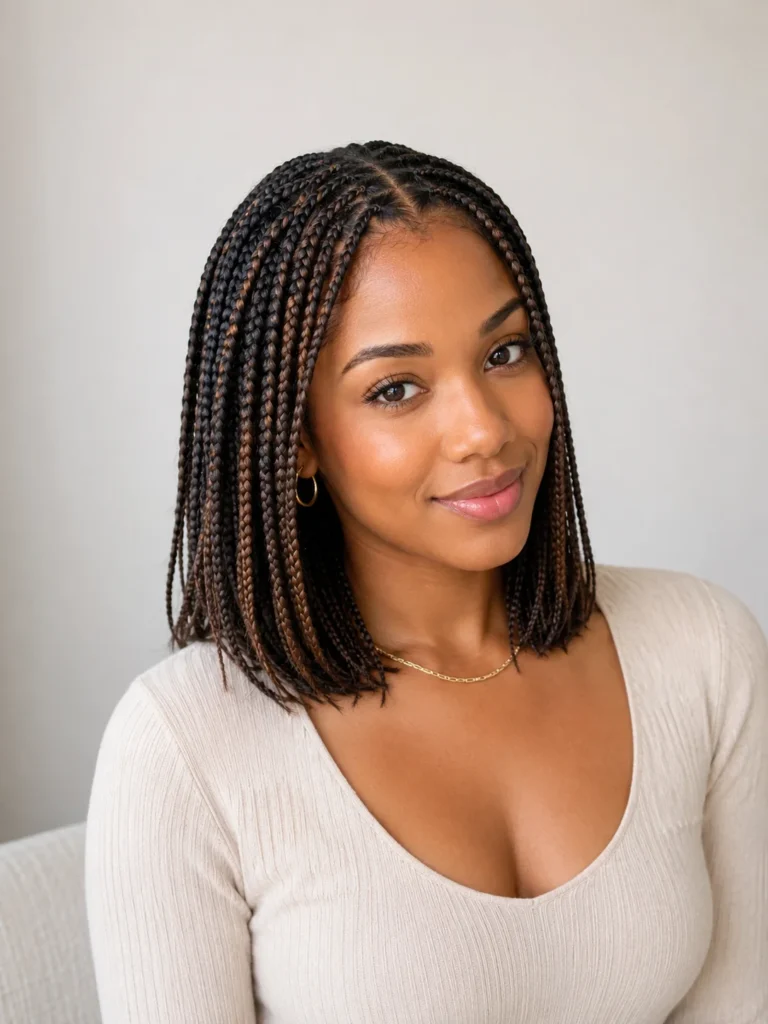
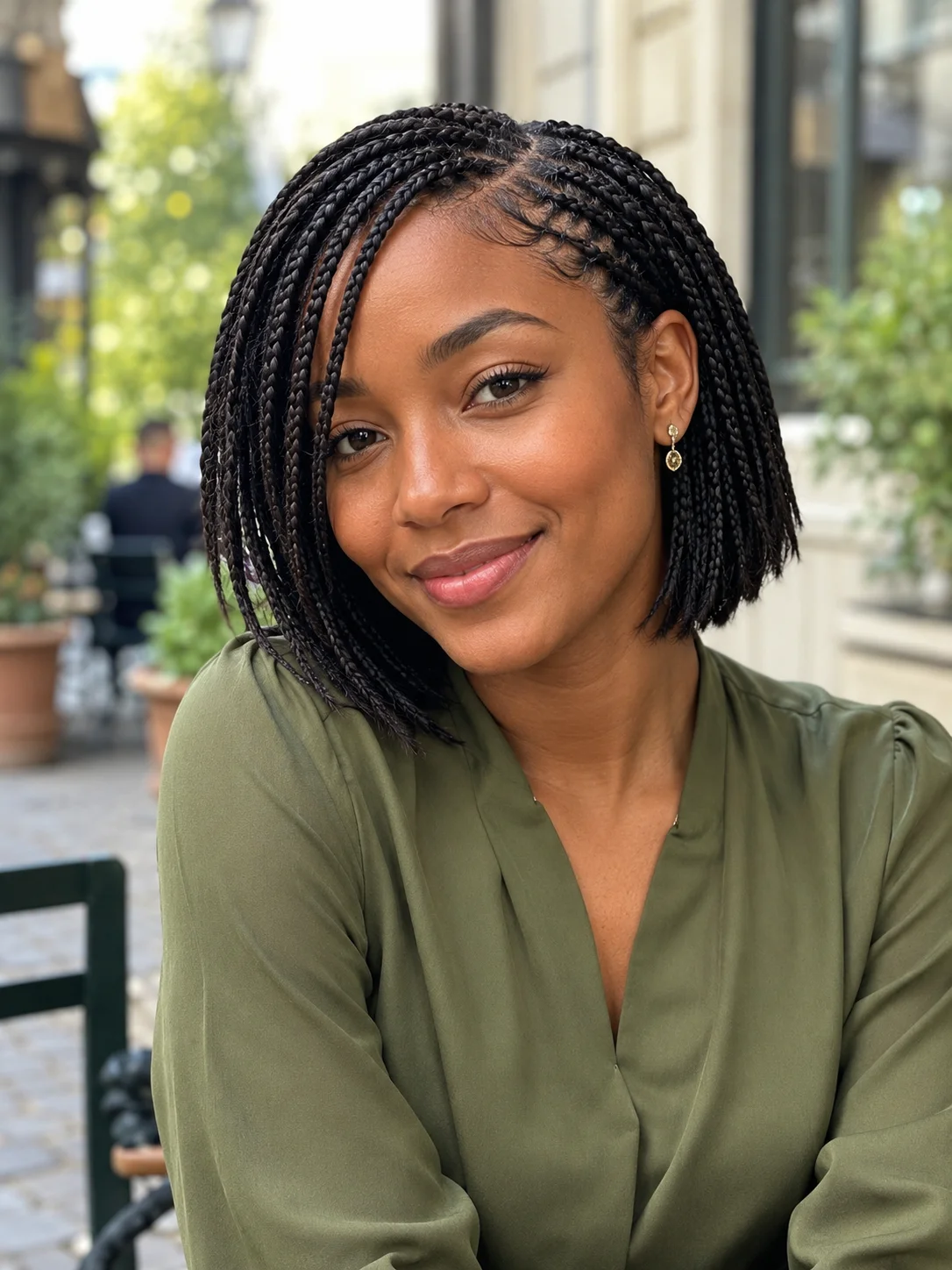
Shoulder-length knotless box braids are one of the easiest styles to live with. They’re long enough to pull into a low ponytail, yet short enough that they don’t feel heavy when you’re driving, sleeping, or wearing a coat.
The knotless start usually lies flatter at the roots than traditional box braids. Ask for medium sections rather than very small parts if your hair is fine around the temples. A soft brown, black, or gray blend can also make new growth less obvious.
Good to know: Keep the ends lightweight. Thick, bulky ends can make the whole style pull downward after a few days.
RELATED: 20 Bob Hairstyle Ideas That Never Go Out of Style
2. Salt-and-Pepper Cornrow Bob

A cornrow bob works beautifully with naturally gray or salt-and-pepper hair. The braids sit close to the head, then stop around the jaw or nape. That shorter length feels tidy without needing much daily styling.
You can follow your natural gray pattern or add braiding hair in two close shades. A mix of silver and dark charcoal often looks more natural than one flat gray tone. Straight-back rows keep things simple, while slightly curved rows soften the shape around the face.
This style pairs well with earrings, glasses, and high collars because there isn’t a lot of hair covering the neckline.
3. Braided Low Bun

A braided low bun is a strong choice for work, church, weddings, or any day when you want your hair off your face. The braids can be gathered at the nape and pinned into a round bun that sits comfortably under a hat or scarf.
Medium braids usually make the bun easier to shape. Very thick braids may create a large knot that feels heavy by the end of the day. For a softer finish, leave one small braid near each temple and tuck them behind the ears.
Use long hairpins instead of several tight elastic bands. That keeps the bun secure without squeezing the base.
4. Side-Swept Feed-In Braids
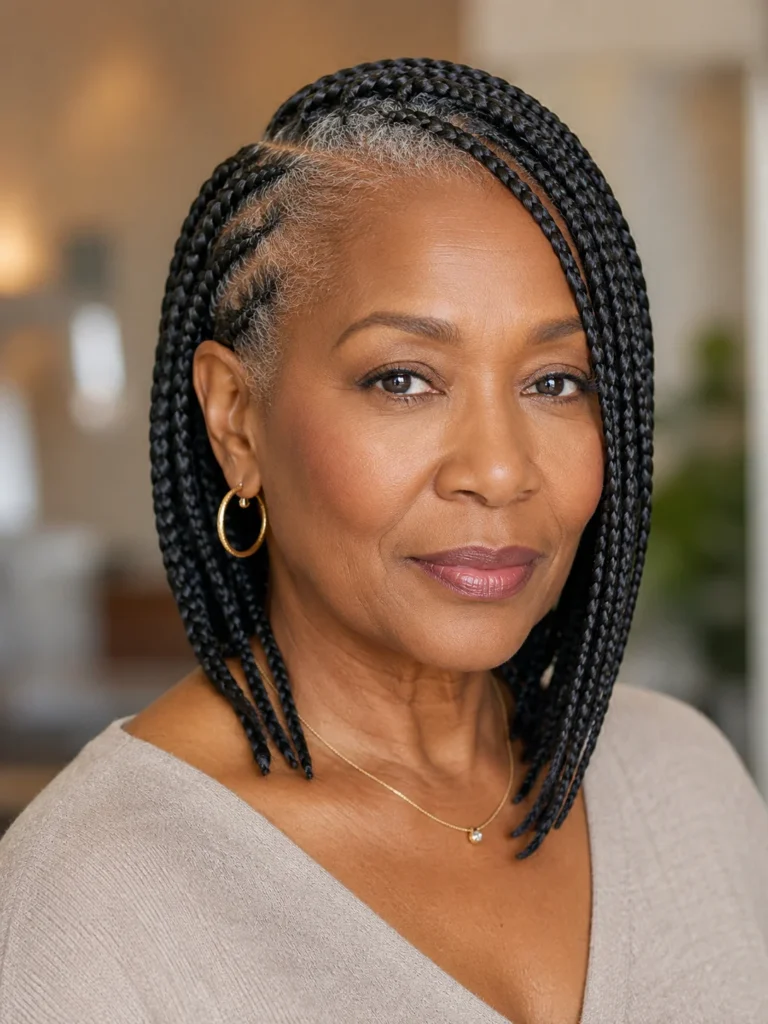
Side-swept feed-in braids move across the head in one direction, creating a clean shape without a center part. They can stop at the shoulders or continue into a low ponytail, depending on how much length you enjoy wearing.
This style can be especially useful when one side of the hairline is fuller than the other. Your braider can change the direction and spacing so the finished look feels balanced. The rows don’t need to be tiny. Four to eight medium braids can look polished and take less time to install.
A little gray left visible at the roots can look intentional rather than something that needs covering.
5. Short Box Braid Bob
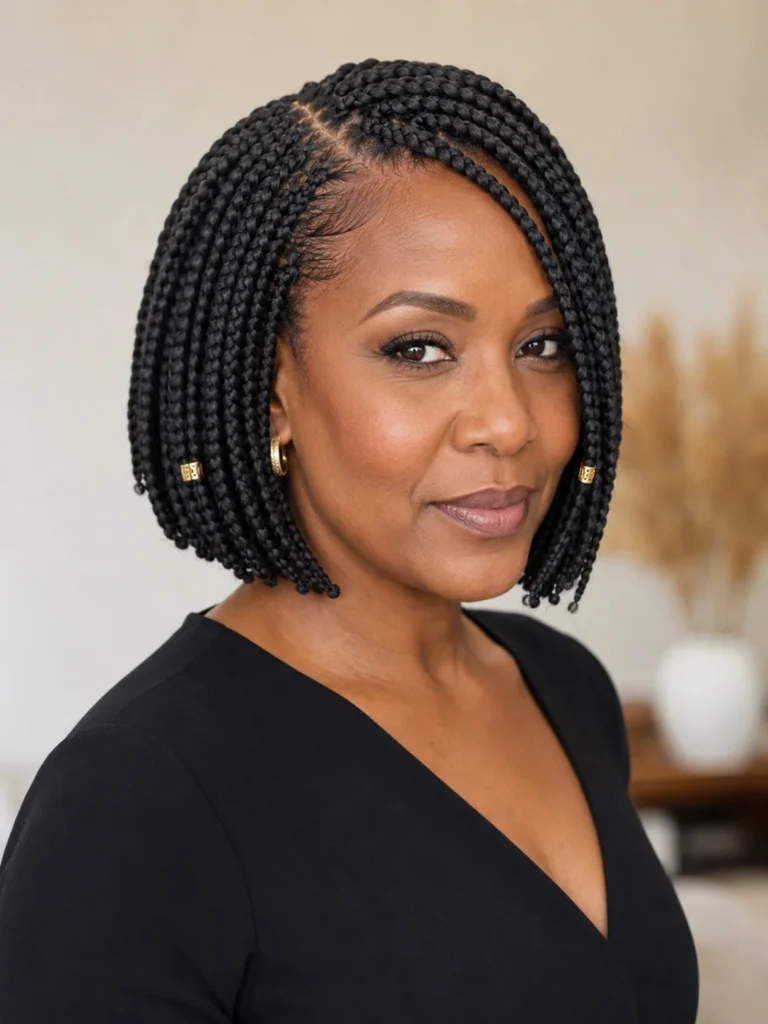
A short box braid bob frames the face without adding much weight. It can end at the chin, just below the ears, or near the shoulders. Blunt ends make it feel modern, while slightly uneven lengths give it a softer shape.
This is a good option for women who like box braids but don’t want hair falling across the back or chest. Ask your stylist to keep the front pieces light, especially near the temples. A side part can add movement without extra styling.
Small gold cuffs or one bead on each side are enough. Too many heavy accessories can pull on short braids.
6. Gray Goddess Braids With Loose Curls
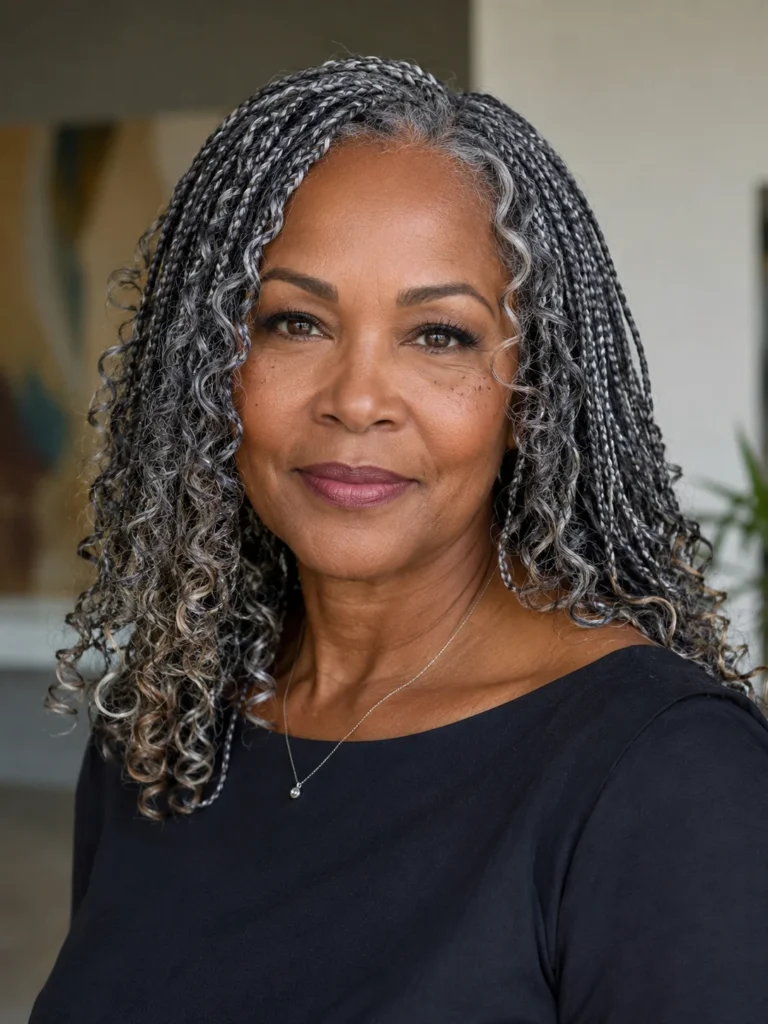
Gray goddess braids mix braided sections with loose curled pieces. The curls break up the solid shape of the braids and give the style a relaxed finish. Silver, ash brown, dark gray, and black can all be blended together.
The loose pieces need more care than standard braids. They can tangle while sleeping or rub against sweaters. Use only a small amount of curl product, then separate the pieces gently with your fingers rather than brushing them.
For easier upkeep, ask for curls mainly around the face and at the ends. You’ll still get softness without having loose hair throughout the whole style.
7. Flat-Twist Braided Updo

A flat-twist updo keeps the hair close to the scalp before gathering it into a tucked shape at the crown or back. It looks dressy, but it doesn’t need added length to feel finished.
This style works well on natural hair that has enough length to twist and pin. It can also be done with a small amount of extension hair if you want a fuller bun. Ask for wider sections if your scalp is sensitive. Tiny parts can take longer and may feel tighter.
A low version is easier for sleeping. A higher version gives more height and leaves the neck open for formal dresses or warm weather.
RELATED:
- 20 Bob Hairstyle Ideas That Never Go Out of Style
- 17 Chic Short Braided Hairstyles That Look Stylish and Feel Easy to Wear
8. Braided Crown Style
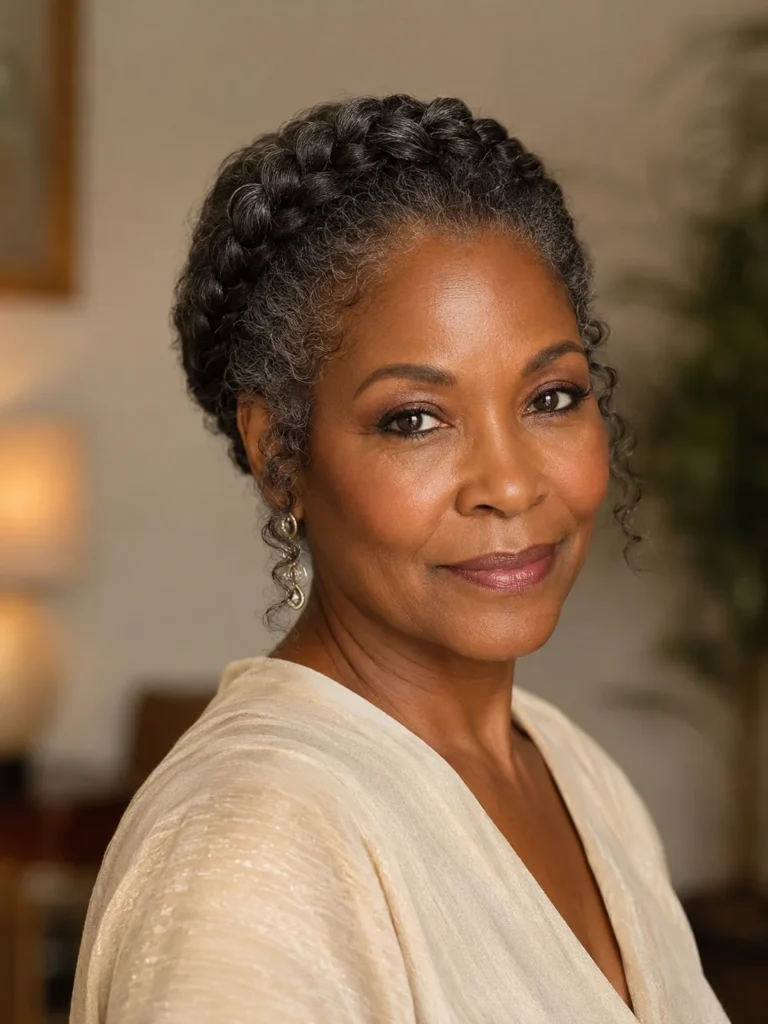
A braided crown circles the head like a soft headband. The braid may sit close to the hairline or farther back, depending on how much forehead you want visible. It’s graceful without feeling stiff.
You can create the crown with your own hair, one added braid, or two braids crossed and pinned. Keeping a little texture at the front makes the style feel less severe. Some women like a smooth finish, while others prefer a few soft curls near the ears.
Make sure the pins lie flat. A crown that looks lovely but pokes your scalp all afternoon isn’t worth keeping.
9. Curved Cornrows Into a Low Ponytail

Curved cornrows add shape before the braids meet in a low ponytail. Instead of running straight back, the rows sweep around the head in gentle lines. This gives the style more movement without needing extra accessories.
The ponytail can be short and full or longer and narrow. For daily comfort, keep the base low enough that it doesn’t press against a car headrest. If the ponytail feels heavy during the appointment, ask the stylist to remove some extension hair before finishing.
Wrap one braid around the elastic for a cleaner look. It takes only a minute and hides the band.
RELATED: 18 Heart Nail Ideas That Look Cute, Romantic, and Easy to Wear
10. Half-Up, Half-Down Box Braids

Half-up box braids give you the freedom of wearing braids down while keeping the front away from your face. The top section can become a small bun, a loose ponytail, or a simple clipped-back section.
This style suits medium or shoulder-length braids especially well. Long braids can make the top portion heavy, so don’t gather too much hair at once. A large claw clip may feel gentler than a tight elastic.
For an easy everyday look, pull back only the braids from the temples. You’ll get a lifted shape around the face without placing much pressure on the crown.
11. Braided High Ponytail

A braided high ponytail can look fresh and neat for special events, family photos, or dinner out. The ponytail sits near the crown, with the braids falling behind or over one shoulder.
Comfort depends on weight. Jumbo braids or very long extensions can make a high ponytail tiring after several hours. Medium braids at a moderate length are easier to wear. You can also start with cornrows that meet at the crown, then add a separate braided ponytail piece.
Don’t sleep with the ponytail pulled high. Let the braids down at night so the scalp gets a break.
12. Large Knotless Braids
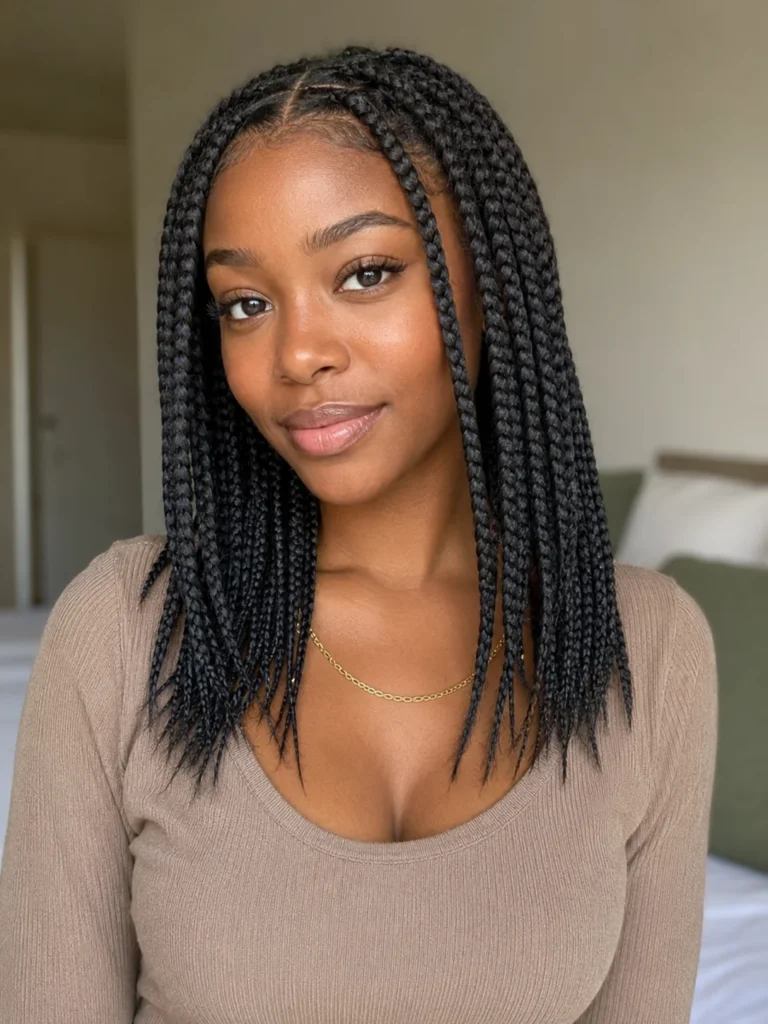
Large knotless braids give a clean, simple look and usually take less time to install than small braids. The larger sections let the style feel open rather than crowded, which can be nice when you prefer a less busy finish.
Keep the length near the shoulders or upper back if you want lower weight. Long, thick braids may look lovely in photos but can become annoying during everyday tasks. Ask for tapered ends so they move more easily.
This style works well in solid black, warm brown, burgundy, or a gray blend. One color often looks calmer than several contrasting shades.
13. Crochet Box Braids
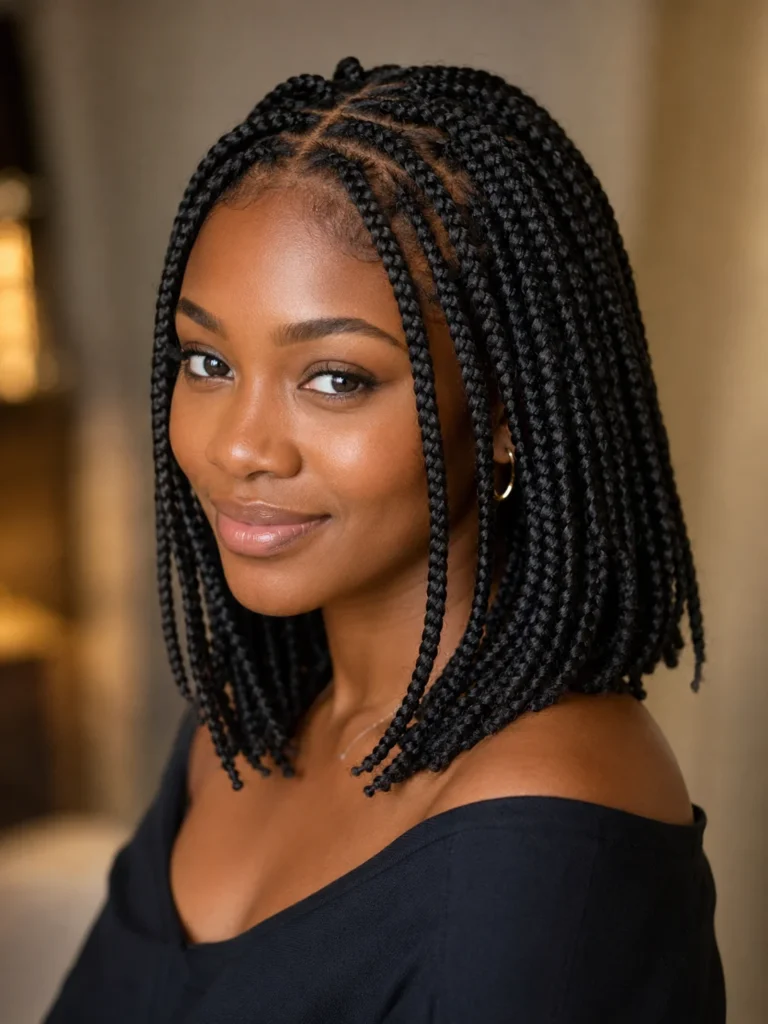
Crochet box braids can give the look of individual braids while reducing the amount of time spent adding hair section by section. Your natural hair is braided underneath, and pre-braided pieces are attached to that base.
The result depends on spacing. Too many pieces can feel bulky and make the scalp hard to reach. Ask for a lighter install around the hairline and crown. You should still be able to touch the scalp between braids.
Crochet braids are also useful when you want to test a new length or color before committing to a longer individual-braid appointment.
14. Braided Top Knot
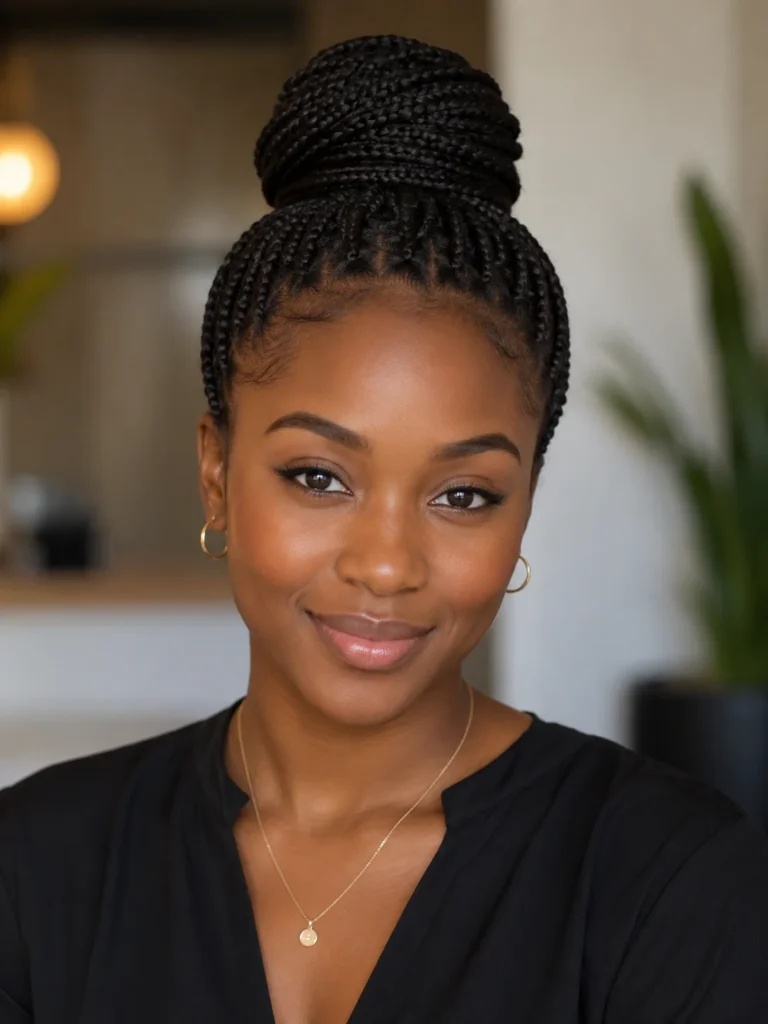
A braided top knot gathers braids into a bun near the top of the head. It works for errands, warm days, and dressier plans when you want your face and neckline clear.
The bun doesn’t need to be huge. A medium-sized knot often looks more balanced and feels better on the scalp. Start by making a loose ponytail, twist the braids around the base, then pin the ends underneath.
If the bun begins to lean or throb, it’s too tight or too heavy. Take it down and rebuild it with fewer braids. Comfort should guide the shape, not the other way around.
15. Braids With Beaded Ends

Beads can make a simple braided style feel personal. Clear beads look light and easy, wooden beads add warmth, and metallic cuffs give a dressier finish. You don’t need them on every braid.
For older women who want a quieter look, place beads only on two or four front braids. Another option is to use matching beads at the ends of a short bob. Keep them lightweight so they don’t swing hard against the neck or pull on the ends.
Check that each bead is secured smoothly. Exposed rubber bands can snag clothing and make the ends look unfinished.
16. Braided Headband With Natural Curls
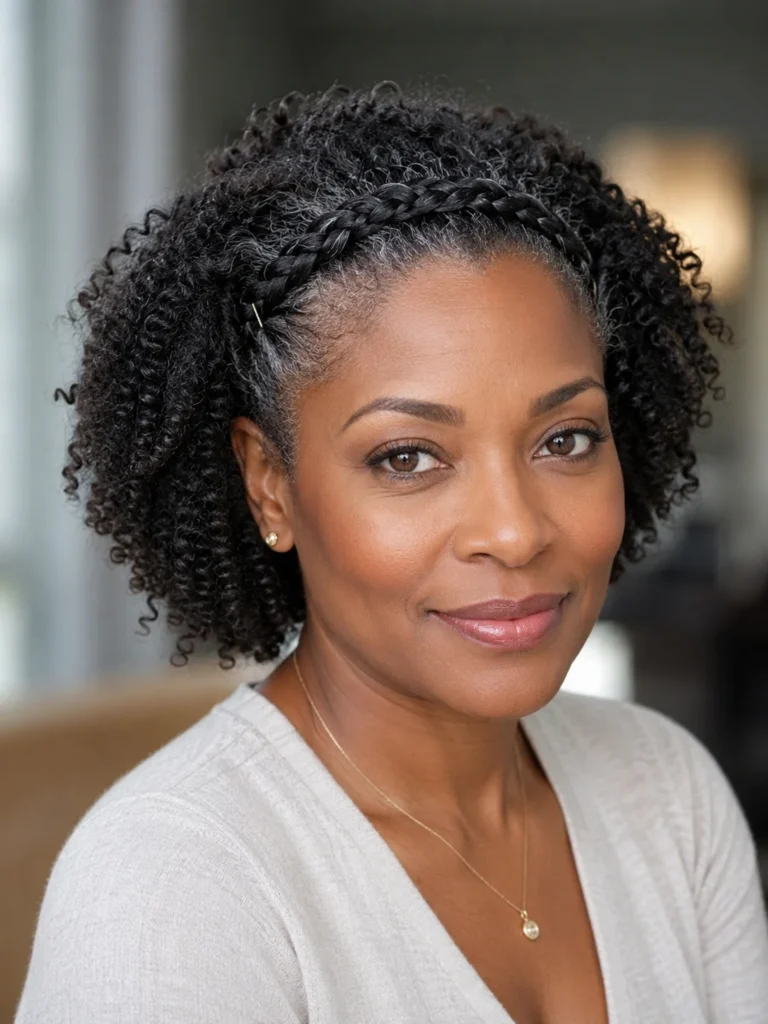
A braided headband uses one or two braids across the front while the rest of the hair stays in curls, a twist-out, or a soft puff. It’s a useful style when you want to keep your natural texture visible.
The braid can be made from your own hair or added as a separate piece. Choose a shade close to your hair so the join looks smooth. This is also an easy way to blend gray roots because the braid creates a clear border near the front.
Use a few pins near the ears, then leave the curls loose. Too many pins can make the headband feel rigid.
17. Cornrows Into a Natural Puff
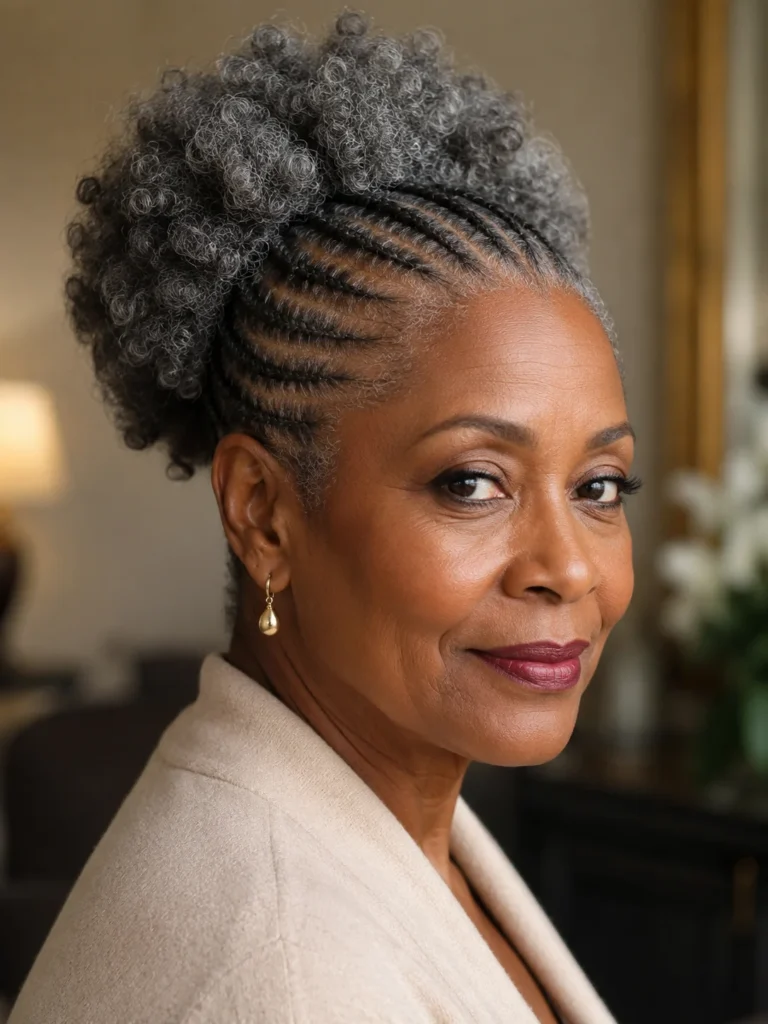
Cornrows into a natural puff give you the neatness of braids in front and the softness of natural hair in back. The rows can go straight back, curve toward one side, or form a simple fan pattern.
This works best when the puff isn’t pulled extremely tight. Use a soft band and move its position slightly from day to day. That helps prevent the same small area from taking all the pressure.
A gray puff can look especially striking beside dark cornrows. You can also add a small amount of textured hair to the puff when you want more fullness for an event.